

By Todd DePastino
In 1864, the American Experiment was on the brink of extinction as the Civil War tore the country apart.
That same year, a Connecticut minister named Elias Brewster Hillard quietly embarked on a search for last living veterans of the American Revolution.
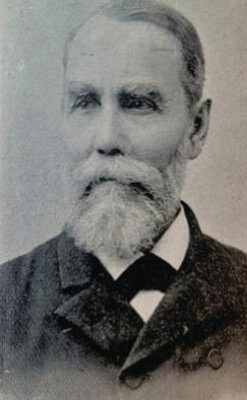
Rev Elias Brewster Hillard, 1825-1895. (Find A Grave Memorial)
Hillard thought that by meeting, interviewing, and photographing these men, who had seen George Washington with their own eyes, he might somehow fan the fading embers of the Republic they forged back in 1776.
“The present is the last generation,” he wrote, “which will be connected by living memory with the Revolution.”
In New York, Ohio, and Maine, Hillard found six men willing and able to sit for portraits and share their stories. They were each over 100 years old and mostly infirm, but proud of their service and sharp in memory.
Hillard’s camera captured faces lined with age. Soft eyes look back, as if seeing beyond us deep into a vanished past.
He published their portraits and brief biographies in The Last Men of the Revolution, a small but remarkable book.
“History lives only in the persons who created it,” Hillard insisted.
The same instinct that inspired Rev. Hillard back in 1864 animates the Veterans Breakfast Club. We gather veterans not simply to honor them, but to listen to them as they bear witness to foundational experiences of war and service. Like Hillard, we are aware that we’re always working against the clock. Every generation has its last men and women.
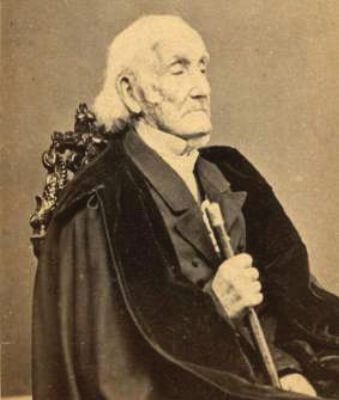
Hillard’s portrait of Daniel Waldo, a
Revolutionary War veteran, at age 102. (Public Domain)
Hillard’s work wasn’t polished history. He relied on memories shaped by decades, and his accounts weren’t rigorously verified. Modern historians, especially Don Hagist in The Revolution’s Last Men, have revisited these veterans’ records, correcting details and filling in gaps.
What mattered most to Hillard weren’t the precise facts. He was after the look of their faces and cadence of their voices, and what endured in their character from those formative experiences ninety years earlier.
One of those men, William Hutchings of Massachusetts, appears on the cover of this issue. His portrait, made in 1864, bridges an almost unimaginable distance: from 1776 to 2026.
Hutchings’ portrait and Rev. Hillard’s quest served as inspiration for this issue of VBC Magazine.
What Hillard accomplished in 1864 with a forty-pound camera, we attempt almost daily with Zoom and PA systems, iPhones and wireless mics. Hillard focused on the last six of our first generation of veterans. We try to reach veterans of all ages, from all the conflicts in living memory.
If we were to speak with Rev. Hillard today, I’m guessing he’d agree with us that understanding our past means sitting down with someone who lived it. And then start listening before it’s too late.
