

The wars that followed September 11, 2001, produced a generation of Americans whose lives were shaped by events that began on a single morning and unfolded over two decades.
The Veterans Breakfast Club Veterans History Project has recorded hundreds of interviews with veterans and military family members. The excerpts that follow are drawn from those interviews with men and women who came of age in the shadow of 9/11 and served in the aftermath.
Rather than present their full stories individually, we’ve arranged them around common experiences: where they were when the attacks occurred, why they chose to serve, what they encountered during war, what it was like to come home, and what remains with them twenty-five years later.
Part I: The Day Everything Changed
Where were you on September 11, 2001?
Corey Mourning, US Army, 2001-2014
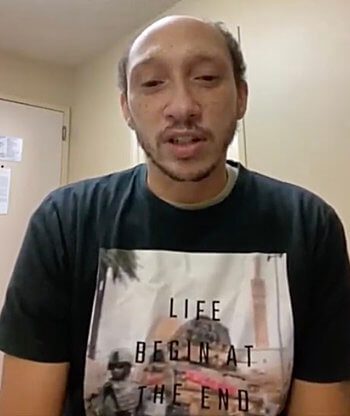
Corey Mourning
I was in Basic Training at Fort Knox. I was seventeen years old, right out of high school.
We were actually on the familiarization range for the M16. We had just finished doing class work learning about the weapon, putting it together, loading, unloading, hot gun, cold gun and stuff like that. They suddenly told us to break for lunch. But it seemed too early for lunch.
“What’s going on?” we wondered.
We all went to the designated area, and the drill sergeants walked up and said they had bad news.
“The Twin Towers in New York have been hit by a plane.”
And everybody’s just like, “What?”
Then, one of us asked, “Are we going to war?”
We thought we might get fast-tracked through Basic and head straight to our companies. The drill sergeants didn’t have answers. But they said if we did get fast-tracked, we’d have to learn everything with our units on the job.
In the end, we didn’t get fast-tracked. We graduated Basic on time.
Andrew Brennan US Army, 2008-2012
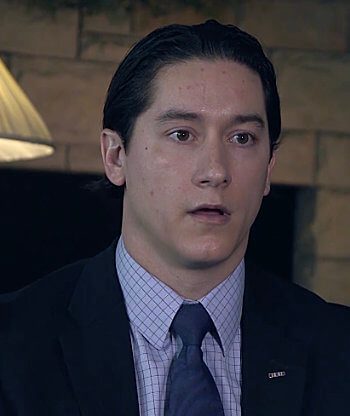
Andrew Brennan
My grandfather picked me up from school on September 11. I was a junior in high school at Central Catholic. We had just pulled the car onto Fifth Avenue, when my grandfather said something that stuck with me.
“The war that’s going to follow from this is going to change your generation. You need to be on the right side of that.”
That changed my life plan right at that moment. Up to that point, my idea of success was to go to Notre Dame and become a lawyer.
But right then, I decided I wanted to go to a service academy.
Karen Bogdan, Air National Guard, 2000-2026
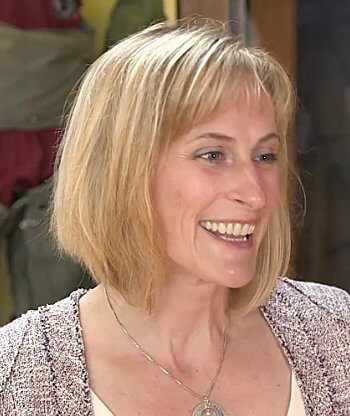
Karen Bogdan
For those of us in the military, September 11 is a day we can’t forget. Things changed on that day, and they’ve not gone back.
On September 11, I was working out at the 171st Air Refueling Wing. We started to hear things about an attack and turned on the news.
“Oh, my goodness,” I thought. “We have jets that are out there flying missions right now.” I knew the crew members flying them.
The National Guard is different from the regular Army. You spend years in one place. Rank doesn’t matter as much. You know everybody, and some of them have worked together for ten or twenty years. You’ve seen them get married and have kids, and you’ve watched their kids grow up. You know them personally. They’re family.
And so, on September 11, it was personal. We had our refueling aircraft up in the air, and I knew the people flying on those airplanes. I had a pit in my stomach and simply wanted to hear that they were okay. Once I knew that, then it was all about doing our jobs.
PART II: ANSWERING THE CALL
Why did you join?
Mark Suckfiel U.S. Army, 2002 – 2011
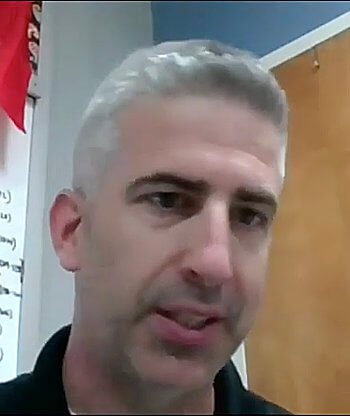
Mark Suckfiel
I’m from a long line of military service that dates back to the American Revolution. It was a foregone conclusion that I would serve.
But, at the same time, I always wanted to be a teacher. So, that’s what I was doing on 9/11. I was a college student doing my student teaching at West Mifflin Area High School. The plane that crashed in Shanksville, Pennsylvania, on 9/11 actually flew right over my school before it crashed into that field sixty or seventy miles away.
On that day I left the school and went straight to the Army recruiter at the Federal Building in Pittsburgh to enlist. But all federal offices were closed, so I couldn’t enlist that day.
I went home and my mother pleaded, “Can you please finish your degree?” We were a blue collar family, and I was the first to be on track to receiving a college degree. So, I finished out my student teaching and enlisted in February 2002.
I joined the United States Army Reserves. My mom hoped I would not be called to active duty. But on November 7, 2003, we were alerted.
A month later, I shipped out to Fort McCoy, Wisconsin, in the depth of winter, to train for desert fighting. I qualified on a machine gun in negative 35-degree weather to go fight in the desert.
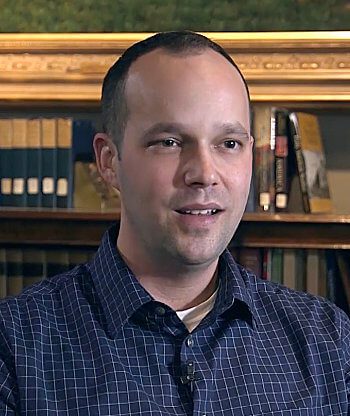
Ryan Ahl, Army National Guard, 2002-2026
Ryan Ahl
I was 17 when 9/11 happened.
I was sitting in class, and my history teacher walked in the room and said, “You’re going to want to turn on the TV.”
We did, and it was probably about two minutes before the second 747 hit the tower, and that’s when everybody knew it wasn’t an accident. I was very upset. So upset I went home early because I wanted to speak to my father about it.
My dad and I talked about what we thought was going to happen, who could be responsible, how we thought the country might react, and what we were going to do.
I told my dad I wanted to join the military. That worried him. But, he said, “If that’s still your wish, I’ll fully support you. You just have to understand that it’s going to be different.”
My dad had been in the Army for 21 years, but he hadn’t served in war. He knew I would.
I joined the Army National Guard. It had been my plan to go to college, and I thought that was the best way to do it. In 2004, we got the word that we were going to be deployed in support of Operation Iraqi Freedom. I had anticipated it. It was exactly what I’d signed up for.
Maria Bardakos U.S. Coast Guard, 2001-2006
Maria Bardakos
I joined the Coast Guard in August 2001. I was 20 years old. At the time, you weren’t allowed to stay on your parents’ insurance unless you were enrolled full-time in college, and college wasn’t working out for me.
My dad said, “You need a job with insurance.”
I was working as a lifeguard at the time. One day, I was driving down McKnight Road and saw a Coast Guard recruiting office.
“I wonder what this is?” I thought.
I walked in, and a recruiter handed me a sheet and a couple magazines.
“Here’s what we do,” he said. “If you want to do it, let me know.”
I saw that the Coast Guard did search and rescue and law enforcement. Even though they’re a military service, they seemed to have a more humanitarian aspect to them.
The next day, I went in and signed up.
I was supposed to leave for Boot Camp later, but then 9/11 happened, and they moved up my ship-out date to October.
Boot Camp was hell on earth. It was my first time away from home. My whole world was completely rocked. That first day especially was rough, and for the next several weeks, you feel completely inadequate. Someone is always yelling at you for something. You’re always doing push-ups because somebody—probably me—was not marching correctly.
And then it’s over. All of a sudden you realize, “Oh wow. I did this.”
After Boot Camp, I got to my first unit, and it was like an instant family. To this day, there’s a group of people who are just a phone call away. They will do whatever it is they can for me, and I for them.
Looking back at who I was when I joined the military and who I was when I came out—and even who I am now—I wouldn’t be where I am without that structure. They taught me how to be an adult. They instilled this drive that I didn’t have before.
PART III: THE LONG WAR
What was the war actually like?
Antonio Jose Contreas, U.S. Marine Corps and U.S. Army, 1992 – 2012
Antonio Jose Contreas
You’re always alert. You’re always thinking what might happen. You’re looking at everything, every window, everyone that comes up to you. You’re looking at anything that might be out of place or that something made you feel uncomfortable.
The first time we were attacked was in Baghdad. That’s when you learn everything is for real now. Your training kicks in.
We had three people get hit. We got hit at the courthouse. So, we had to lock everything down. People were trying to rush into the courthouse, but it’s chaos, and you don’t know if they are friendly or insurgents. Little kids were trying to get in. I was trying to let them in. It was all crazy.
War is chaotic. You’d be driving and getting shot at. And it takes a while to realize, oh, they’re shooting at us. You can’t always tell what’s going on.
My unit got lucky. We had no one die while I was there. We had a couple close calls. I’ve seen what a car bomb can do. It’s hard.
I did have a friend who died in an explosion, but I wasn’t there. I was in training. I read about it in the Army Times. That’s how I found out. It shook me.
Steve Snyder U.S. Navy, 2001 – 2009
Steve Snyder
I deployed to Iraq in 2006 without a unit because I was what they call an Individual Augmentee in the Navy Reserves. I was just essentially there to help in any unit that needed it.
I served over near Lake Habbaniyah, part of the Sunni Triangle, about 75 kilometers west of Baghdad. I had dreams of grandeur that I was going to be out there making a difference.
I didn’t expect to be inside the wire 99.9 percent of the time. I didn’t leave the base at all except for a convoy or two that I was part of. There were incoming mortar attacks from time to time, but I wasn’t in danger. Most people would be thankful for that. But being in relative safety the whole time — that’s always kind of been challenging to me.
I was part of the unit that was responsible for taking care of our fallen warriors and sending them home. And what a lot of people don’t know is it wasn’t just fallen American soldiers. Even insurgents that were killed in gunfights, they were also brought back to the base and cared for. And then they were taken to the entrance of the base and the locals would come and take the remains.
We cared for anybody regardless of what side they were on. Would I do it all over again? In a heartbeat.
Karen Bogdan, Air National Guard, 2000-2026
Going to Iraq was scary. But it was something that I wanted to do. I volunteered to fill a position that the active duty didn’t have somebody to fill.
It was December 2011 when I got there, so we were just starting to draw down our forces. But it was still very active. And it’s one of those things that makes you realize just what a gift life is. Every day you have.
I can tell you that I’m fortunate enough to not personally witness much in the way of combat. But just sitting there in the safe dining facility eating your meal and all of a sudden feeling the table and watching your silverware shake and everything because there was an attack.
I’m appreciative of having had the opportunity to go. I’m glad that I did it. As somebody with as many years of service as I have, I wanted to be able to say that yes, I did do my part. I’ve been there. I’ve seen it.
But I can tell you honestly that I hope to never have to go back.
I remember seeing a young man I didn’t know in the hospital. He wasn’t in my maintenance detachment. He was suffering from severe psychological aftermath of having seen a lot firsthand. And to be there and to see this young man in that state—it was difficult.
It’s war. It’s ugly.
Corey Mourning, US Army, 2001-2014
After two weeks of R&R during which I celebrated my birthday with my twin sister, I returned [to Iraq] and saw that the roads were black. There had been a big firefight. It was like Black Hawk Down.
One of my friends had died on that day, which was my birthday. Specialist Travis Babbitt. I turned 21 on that day, and he died.
I was happy to have been able to spend that time with my twin, but getting back to work with your friends, your boys, your brothers . . . It was bad.
I felt very helpless. My boys were out there. My brothers. And I know I was lucky to miss it, which I’m very grateful for but my brothers were there.
I think on the date of action in November 2007, probably one of the core values that I fell back on the most was personal courage. Everybody demonstrated their own individual acts of personal courage that day. I even remember times throughout the attack that I had to really kind of take a mental inventory.
“Okay. This is what I got to do. Let’s go do it.”
And even after all these years, I can still get that feeling in my stomach.
“I know this is dangerous. I could die doing this. But I have to do it for my brother out on the trail.”
Those that were killed in action that day—I don’t think I’ll ever forget their names.
I used to wear one of those bracelets that you see people wear honoring somebody who was killed. I had all their names on my wrist. After a while, I realized I didn’t need to wear the bracelet to remember. So, I took the bracelet off and kind of made that next step in my own healing process.
But anytime I’m able to speak, anytime I’m able to talk with service members and veterans, I like to share their stories and things that we did together.
PART IV: COMING HOME
What happened when the deployment ended?
Josh Galiyas, US Army 2001-2008
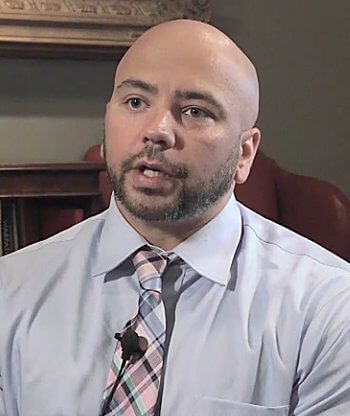
Josh Galiyas
People were so happy for us at the airport when we arrived on Delta Airlines from Kuwait. We stopped in New York before we then took a smaller plane to Tennessee. People at the airport bought us meals.
It was different from what Vietnam veterans received. And for that, I’m thankful. I feel bad for the guys before me that didn’t receive that same welcome.
But coming back was its own thing. I mean, anytime you go to combat, everybody’s roles change.
So, my girlfriend’s roles changed. My family’s roles changed. I would imagine it’s even more serious for guys that have families, kids, wives.
I was gone for thirteen months. It’s hard to readjust your relationships. The entire time I was deployed, I was like, “I can’t wait, I can’t wait, I can’t wait to get back.”And then you get back, and not everything’s as great as you wanted it to be. That in itself is a setup for disappointment.
Sometimes, things don’t get better because you’re home. That’s where some of those secondary issues of PTSD come out in guys, from my experience, such as depression and anxiety. Folks turn to alcohol and drugs.
I had a hard time respecting my own buddies that I grew up with. I came back to the same area where I’m from, and most of these guys were basically doing the same thing this whole time. They went to college, but really their lives had changed minimally, where my life went all over the place.
It sucks to admit, but sometimes I’ll have conversations with these guys, and they’ll be talking, and I just don’t value what they’re saying. So that’s why I really do enjoy being around my veteran buddies.
Ryan Ahl, Army National Guard, 2002-2026
Coming home was very . . . it could be very difficult. You have a honeymoon period, but it doesn’t last. You are young, and you’re amped up on the fact that you were in an area where you could die at any time. You really could. I mean, whether it could be a mortar, it could be a sniper, it could be an IED. You spent a year on edge.
When you come back, you have this loss of perspective.
I mean, a lot of people went into high thrill-seeking things to try to keep that adrenaline up. A lot of people inappropriately self-medicated with alcohol or drugs. And they’re trying to deal with their family because as much as you don’t want to believe it, life has gone on without you. Things are different.
Family roles have changed.
I wasn’t married at the time, but I did have a girlfriend. And reestablishing that relationship was tough.
In war, you feel a real sense of purpose every day. What you are doing is important. You’re out there and you’re supporting the people around you. It’s important just because of that. Because it could come down to their lives being in your hands or vice versa. And then you get home, and you have this loss of purpose.
“What’s the point?”
I have PTSD largely from my first deployment, which was more violent than the second. There was that fear of dying every day, and then there was that adrenaline and that sense of purpose that you get used to.
When I came home, I felt angry all the time, and I was worried about it. I didn’t like being in crowds, and I felt when I would walk out the door, I would feel like I was missing something because I didn’t have my body armor. I didn’t have my ammo. I didn’t have my weapon.
That was a sensation that didn’t go away for a long time. I would always be feeling like I was missing something.
I didn’t seek help at first. I didn’t want to admit that I needed help. I didn’t want to admit weakness because that’s what I saw it was, even though it really wasn’t. I felt like I was getting along okay or that it was somewhat normal because some of my other friends were going through the same thing and we could talk to each other.
After my second deployment, I knew that something was still wrong. My body had been amped up for stress and violence all the time. When I came back from my second deployment, I realized I was mature enough and old enough to realize there was a problem.
So I went to counseling, and it was like a whole new world opened to me. I never realized how powerful that type of therapy could be, but it was an instant relief. I remember my first therapy session. I just let it all out. And the therapist just let me. I mean, I was upset. I was physically upset. I was emotionally distraught. I just let it all out. That was so fulfilling to be able to do that.
Karen Bogdan, Air National Guard, 2000-2026
Honestly, there are certain details about coming home that I just don’t remember. It was all kind of foggy and overwhelming.
I had made it clear to my family that I didn’t want any kind of big surprise party or reception or anything like that.
I flew in commercially into the Pittsburgh airport. It was Easter Sunday, in fact, the day that I arrived home. And my kids were there and the rest of my family.
I’ll never forget, my daughter was not feeling well. She had been ill and having a rough time. She was at that time just two.
She wouldn’t come to me, she wouldn’t let me be the one to comfort her because I had been gone for so long and she had gotten used to it not being me to be the one to comfort her. That was really difficult for me.
But the people of the community have been wonderful. On the flight home, the flight attendant learned I was returning from Iraq. She made an announcement on the PA system, and everyone clapped. I was just trying to get rest. But it was nice.
I can’t even begin to tell you how many times I’ve been stopped by people when I’m in uniform and they just say thank you for your service.
We wouldn’t be where we are today without that support from the community.
PART V: WHAT REMAINS
Twenty-five years later, what stays with you?
Darrell Utt, US Army Special Forces, 1990-2016
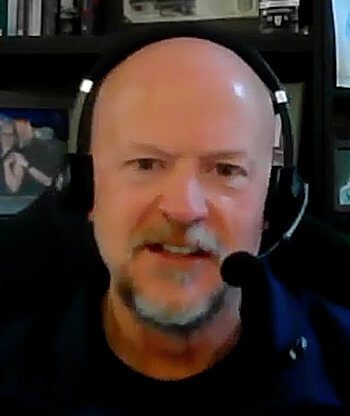
Darrell Utt
The first podcast I did was with Ryan Fugit. It’s Combat Story. Ryan interviewed me. I’m an introvert but talking with Ryan was therapeutic. It was good to talk about some of those things, some tough topics.
I mean, there’s things in combat that you just can’t unsee. Once you see those things, they’re with you.
It was therapeutic for me.
I really feel like there’s an obligation for my generation to tell some of these stories and to let our younger generation know that there’s a way to serve.
Maybe we can tell some stories and there’ll be some folks out there listening that may get a little inspiration.
Maybe they hear about my background, not being the greatest student in high school and not really having a lot of opportunities to go to college financially right out of high school.
Maybe some of those folks can hear some stories, hear my story, hear other veterans’ stories and be like, wow, my story is similar to that guy’s story.
Maria Bardakos US Coast Guard, 2001-2006
I think it’s important for veterans to talk to somebody about their experiences.
Not every veteran was in combat. I wasn’t in combat. I was on a boat. I did security on oil platforms. But my time in a Middle Eastern country, it’s always in the back of my mind—when I was there and the people that I was there with.
Now working at the VA, a lot of my patients are Vietnam veterans. And seeing their underlying mental health issues, I think that’s the biggest thing.
Veterans often carry around stressful experiences. I hear some of them in my job. My uncle was in Vietnam and over the years he’s always told us little bits and pieces of when he was over there. It wasn’t until recently that I even knew he was in combat.
There was so much backlash from the Vietnam War that veterans just held it in and never told anybody, because a lot of them didn’t even say that they were in the military at that time.
I love working with veterans because I understand them.
We’re allowed to wear military shirts with our scrubs and I usually have a Coast Guard shirt on. Most of the time the patients are like, “Oh, Coast Guard?”
“Yeah, man,” I say, “I was in the Coast Guard.”
It almost instantly—even though they were a Marine or in the Air Force or in the Army, it doesn’t matter. We all went through Boot Camp.
They relax just a little bit, knowing, “Oh, well, you’re a veteran too.”
The one thing that I will forever hold with me from my time in the military is just the camaraderie and the brother-and-sisterhood.
I wouldn’t change it for the world because I am who I am because of those experiences.
Kyle White, US Army, 2006-2011 (Medal of Honor)
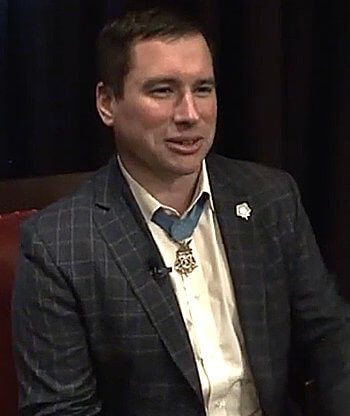
Kyle White
I’ve been out of the Army going on twelve years now, and you can always recognize and appreciate when somebody demonstrates integrity—telling the truth, making a mistake and owning it, whatever it may be.
That accountability and owning up to it and having that real personal courage to come forward is something I value a lot.
