
By Todd DePastino
Fifty-seven years ago this week, at 9:00pm on December 1, 1969, CBS News pre-empted Andy Griffith’s Mayberry R.F.D. to broadcast the strangest game show in history. It was the first Draft Lottery of the Vietnam War, and millions of American men watched in anxious hope that their numbers weren’t called.
CBS News correspondent Roger Mudd welcomed viewers to the Selective Service headquarters in Washington, DC, where government officials assembled around a large glass jar containing 366 blue plastic capsules. Each capsule held a rolled-up piece of paper with a date on it. October 11. April 20. July 16. And so on.
Here’s how it worked: The order in which the dates were drawn determined the order in which eligible men born between 1944 and 1950 would be called up for military service in 1970. If your birthday was the first one drawn, you were first in line to be drafted. If your birthday was among the last drawn, you could breathe a sigh of relief.
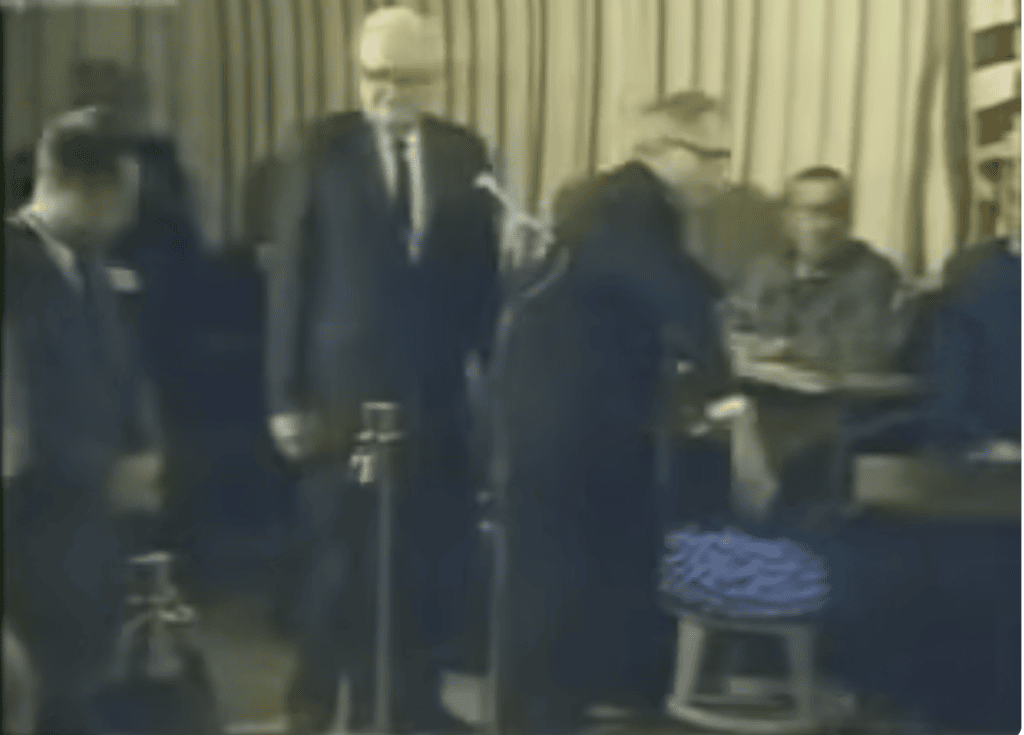
Master of Ceremony was the distinctly uncharismatic Lt. Gen. Lewis B. Hershey, who had been the Director of the Selective Service system since 1941. Hershey stepped to the microphone, briefly explained the process and invited New York Congressman Alexander Pirnie, member of the House Armed Services Committee, to reach in the jar and pull out the first capsule.
Pirnie handed the capsule over to a seated official, who opened it, unscrolled the paper and read in a clear slow voice: “September 14.”
The official then handed the paper slip to second official standing at a giant white board with 15 columns of numbers ranging from 001 to 366, left to right.
The second official repeated “September 14” in a loud voice, then added “001” and stuck the piece of paper next to the top left number on the board.
In living rooms and college dormitories across America, thousands of young men with September 14 birthdates suddenly learned they were heading to the Army.
The game show continued. General Hershey called forward a thin young man with a goatee, Paul M. Murray, member of President Nixon’s Selective Service Youth Advisory Committee. Murray reached into the jar and pulled out the second birthday: April 24. That date became number 002.
Then came December 30. Number 003.
For the next 90 minutes, the big white board filled up with dates pasted next to numbers. The last date drawn was June 8. Those with that birthday were safe from the draft, as were all those whose birthdays appeared next to number 300 and above.
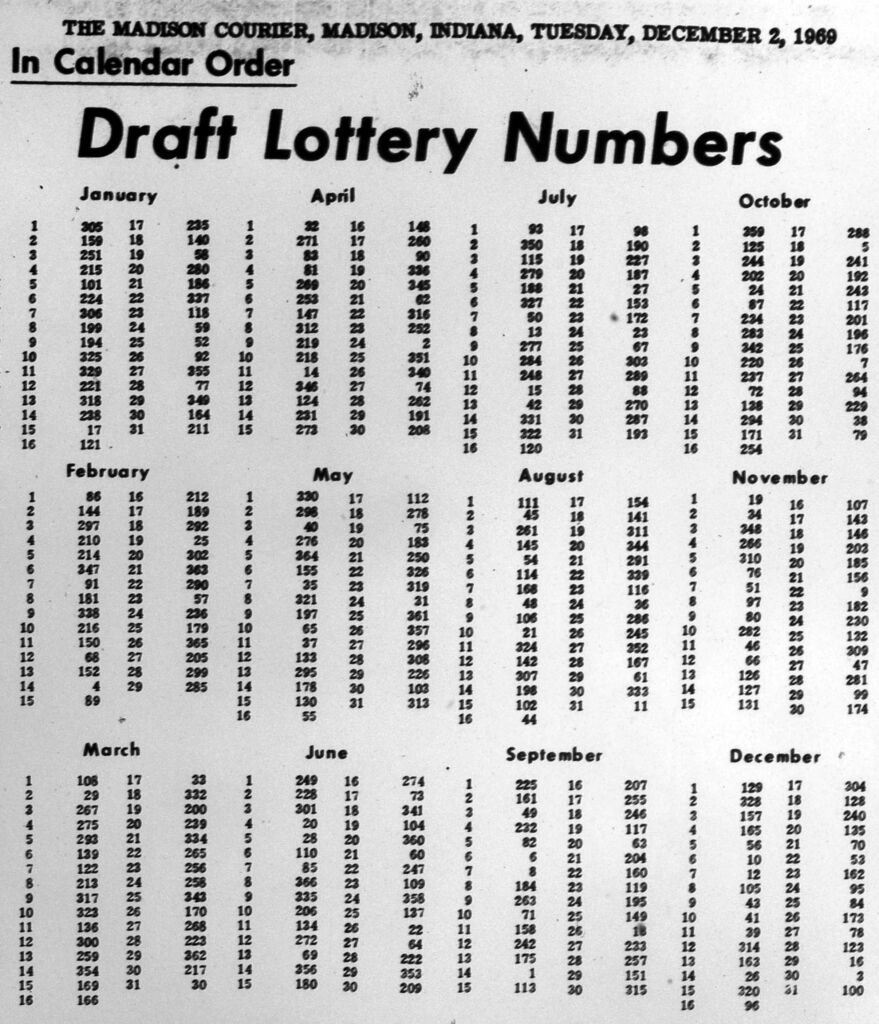
This strange lottery was President Richard Nixon’s attempt to restore some measure of fairness to a draft system that had become notorious for its inequities. The old system the lottery replaced had been based on 4,000 local draft boards which exercised enormous power in determining who would serve and who would be granted student deferments, physical disqualifications, or special exemptions. This system favored young men from affluent families who could afford to attend college or knew a doctor who could write a note declaring the man physically unfit.
The lottery took some of the favoritism out of the process. Over time, the student deferment and other exemptions were eliminated, leaving the Draft largely to the luck of the draw.
Statisticians reviewing this first Draft Lottery result would note that men born late in the calendar year were more likely to have their birthdates pulled early and assigned low numbers. It turned out that blue capsules in the jar hadn’t been mixed well enough. The November and December birthdays had been dumped in last and remained near the top of the jar.
Even if it had been perfectly random, the Draft Lottery seemed like a grotesque version of Prime Time entertainment, a glimpse of a dystopian future. It mixed game show procedures with the trappings of official government business, all played out on live TV with men’s futures at stake.
The Draft Lottery was fairer than the old system, to be sure. But the old system was opaque and bureaucratic, hidden from view, operating in smoke-filled rooms in thousands of locations of locations around the country.
This new system was out in the open, a shared public experience, a national moment. Such transparency didn’t quell the opposition to the Draft. It merely focused the opposition to the whole idea of conscription.
President Nixon recognized the problem right away and started planning an end to the Draft all together. Two months after the first Draft Lottery, a presidential commission unanimously recommended moving to an all-volunteer force.
The last draft calls came in December 1972. The bizarre lotteries wouldn’t end until 1975. But by then, the Selective Service system had stopped requiring low number birthdays to report for induction.
The Draft Lottery lapsed into a footnote of history. Not a bold reform to improve a flawed system, it served as a way station on the route to the all-volunteer United States Armed Forces.
