

By Nate Webster
Nate Webster grew up in Uniontown, Pennsylvania, and graduated from West Point in 2011. He commissioned as an infantry officer and served with the 101st Airborne, later becoming a Special Forces officer with deployments to Afghanistan, Iraq, and locations across Africa. Nate is a recipient of the Pat Tillman Foundation Scholarship and graduated from Harvard Law School in 2026 where his scholarship focused on constitutional law, particularly questions of American civic identity and the intersection of national security and emerging technology. After graduation, Nate intends to practice in Hawaii.
Third Period
I was in third period history class with Mr. Geller the morning of 9/11. He taught seventh-grade world history. If you had asked me then to define history, I suppose I would have said that history is a field of study of past events, finished facts. History happened to other people in distant lands. History is a thing you read. Other people lived it.
That day changed my definition. We all have a visceral version of the next few minutes and hours. In my classroom there was a small TV mounted in the corner a few rows from where I sat. We watched the news like millions of others after the first tower was struck. Then, the second. Then the Pentagon. Then, somewhere over a field in Pennsylvania, 60 miles away from my classroom, United Flight 93 came down.
Later on, I would learn how much weight a place can carry when violence happens there. It is both mundane, quotidian, historical and extraordinary. I’ve felt it on battlefield tours, visits to sites of atrocities, and in countries where war-torn is a present description. That morning, I felt the shadow of it but did not process it for many years. Our country had been attacked from far away, and a few miles down the road.
At some point, Mr. Geller, a Marine veteran, turned the TV off. We were studying, as best I can recall, the ancient Egyptians. I don’t remember everything he said, as I now suspect he was stalling for time and staring at many anxious middle schoolers. I do remember that he told us that what we were watching, what had just happened, would likely shape the rest of our lives, and then he said, “so today is a good day to study history.”
He encouraged us to remember, pay attention, take notes, and contextualize. The textbooks we dutifully read, filled with facts and dates and stories, and that small television screen became, on that morning, one and the same. We were in history.
That moment has shaped every path I’ve walked since. Where I went to college and where I went to war, every relationship I’ve formed, every effort I’ve taken — all flowed from that day. Thinking about this has helped me realize that history, when really understood, tells us not only of our past, but hints at our future. As we near two milestone anniversaries this summer – the 250th anniversary of the signing of the Constitution and the 25th anniversary of 9/11 – we’re given a profound opportunity to learn about ourselves, each other, our place in the world, and what we may become.
Family Business
My own family history and connection with the uniform began, at least in America, seven generations back. A young German man, Valentine Derry, left the old world with his wife and came to the new as a Hessian — one of the mercenaries the British hired to police their colonies and put down an emerging rebellion. Like several thousand other Hessians, once he arrived, he defected and fought for the Patriots for over a year. When the Revolutionary War ended he settled in Fayette County, PA, in a small village about ten miles from where, two centuries later, I was born and raised.
Many of his descendants wore a uniform as well. Most recently, my maternal grandfather, Harry Oldland Sr., who lives near the small town our Hessian ancestor settled in, wore a Marine’s uniform in Korea and Vietnam. His son, my uncle Harry, wore the same. Their stories weren’t the only ones we told about our family history, but as a young boy, they were the threads I wanted to weave into my own story.
By the time I was old enough to think seriously about what to do with my life, our country had been attacked, was at war, and the family service record made the question of “what do you want to do when you grow up?” simple to answer. Even before 9/11, I’d had a desire to serve, but that moment and the subsequent ones made my path clear. The wars were on the news every night, and it felt like the only path worth walking.
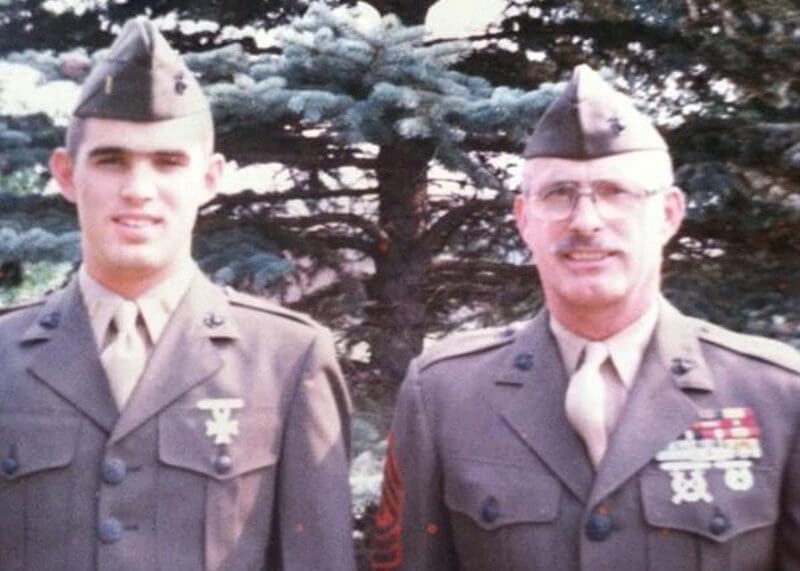
Nate’s uncle Harry Oldland Jr (left) and grandfather Harry Oldland Sr (right). (Nate Webster)
While I had some reservations about what I would potentially be supporting as our war in Afghanistan expanded into Iraq, I read Nate Fick’s book One Bullet Away, and realized that my duty would be, in fact, small. Not small in its importance, but in its scale and focus. I didn’t need to worry about political decisions and grand strategy; my role was most important to those around me, my future platoon, that was my small circle of responsibility.
In 2007, I matriculated to West Point. As cadets, we were all aware that once we graduated we would be going to war. Nate Fick’s story of invading Afghanistan, and then, for reasons that were unclear to him, Iraq, while leading with moral courage, gave me solace, especially as the war in Iraq escalated into new levels of violence and domestic criticism mounted.
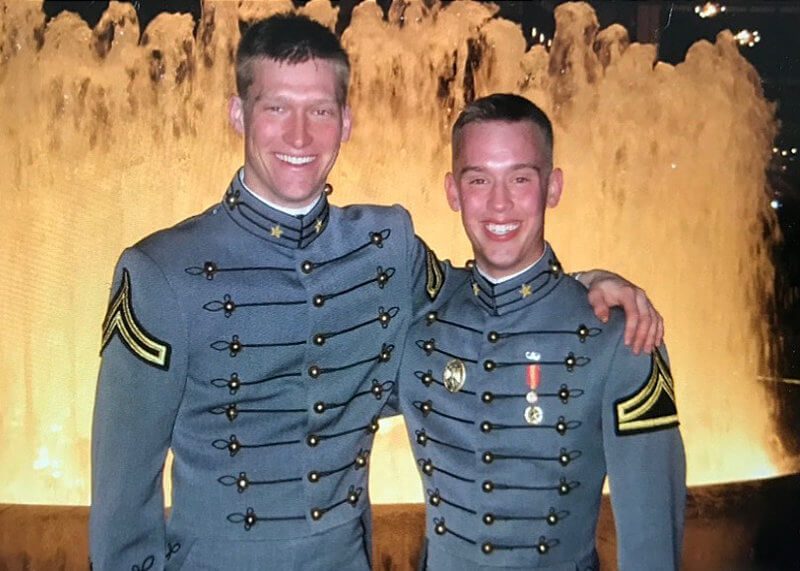
Nate Webster (right) as a West Point cadet, 2008. (Nate Webster)
We silently memorialized the graduates who’d lost their lives with taps overlooking the historic Plane, a parade field they’d recently walked across. The stark reality of what awaited us became real. What I now understand is that as raw as the risk felt, it was also part of the draw.
Deployments
After graduation and initial infantry training at Fort Benning, Georgia, I was assigned to the storied 101st Airborne Division. Ahead of our deployment to Afghanistan, we trained extensively on our individual and collective tasks in the summer heat of Fort Campbell, Kentucky and in the musky humidity of Fort Polk, Louisiana. Although we were tactically ready, I felt like we were behind in understanding the complexity of the country, the people, and their history.
After arriving in country, my concerns became true. My battalion deployed to Paktia Province near the border with Pakistan. It is a rugged, mountainous, complicated place. No matter how well we operated, it felt like we didn’t know where we were and who we fought alongside. We weren’t lost on the map, but we functioned without knowing where we were in the story of that place, or what role we played.
The strategic confusion out of DC and the Pentagon, while not a constant consideration, did seep into our daily patrols. It was 2012, eleven years into the war, and we were confidently told by our leaders that we would be imminently departing Afghanistan. We worked endlessly on evacuating several small bases in the province while attempting, without having the necessary expertise to train our Afghan counterparts to become a professional fighting force before we left. We epitomized the frustrating reflection that the conflict in Afghanistan “[wasn’t] a 20-year war, but a one-year war fought 20 times.” We tried in earnest but struggled in our missions, namely because we weren’t trained in how to train others.
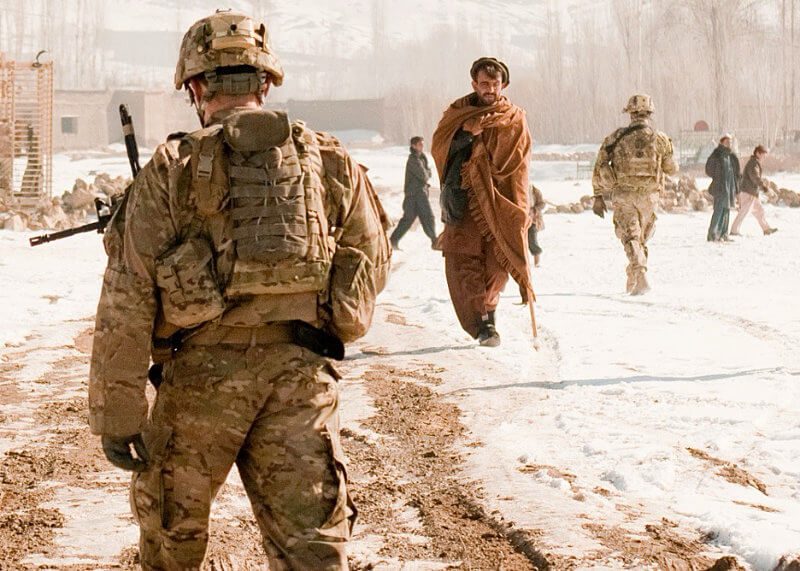
On patrol in Paktia Province, Afghanistan, 2012. (Nate Webster)
There were some units operating around us that seemed to have done their homework. They knew where they were, what they were tasked to do, knew the locals, and had invested in those relationships by returning to the same villages and provinces again and again. They were Green Berets.
They lived in the villages we only visited, moved through the world differently, thoughtfully. They were trained in how to train. They built rapport organically, by working side by side with the Afghans. The intention they operated with reminded me of the professors I’d had at West Point who were Green Berets. They’d taught differently, forcing us to think about problems in greater detail, and admit that the assumptions we had could be wrong. In Afghanistan I saw that commitment to truth pay off. Believing that you can never learn too much and should always question what you’ve learned against what is in front of you is part of a Green Beret’s training. In them I saw what Mr. Geller would have hoped for: soldiers who had studied history.
The pull toward Special Forces had been building in me for years. As a cadet I read Eric Blehm’s The Only Thing Worth Dying For and could not put it down. I started it on a train ride down to NYC, and don’t remember if I explored the city at all that weekend. I couldn’t stop reading the story of the Special Forces ODA (Operational Force Alpha or A-team) in the early weeks of the war, twelve men whose job hinged on trusting one another.
During my second year at West Point I took American Politics with Major Tommy Sowers, a Green Beret with combat experience now teaching in the classroom. He pressed us to think about active citizenship as a discipline. What did it mean to study politics? To be engaged in civics while being civil? To be political, and a future instrument of policy, while also being polite? Those unresolved questions of the social contract we signed, what we owe one another, and how it has evolved over the years, became real in time. We read Locke, Hobbes, Jefferson, and overlaid that with our pending deployments. Like Mr. Geller, he knew we needed to know our history before we went out and tried to make our mark on the world, wherever that would be.
Then, in Afghanistan, I saw that intellectual approach in action. Special Forces teams learned the language (or enough of it to be useful), the history of the regions they deployed to, and synthesized that with their mission. The stories of those teams have been told over the years in many books, but the throughline that connected their work was the cultural attributes of the Green Berets. They committed to knowing and understanding. That understanding came from two streams. One was study, hard and deliberate — the kind every Green Beret will recognize as the output from the imperative to understand your operational environment. The other was a practiced, and perhaps even forced, introspection, the willingness to let what you were seeing actually change you and challenge your assumptions.
The teams I admired had figured out that you cannot read a place well from the outside until you have done some honest reading on the inside. Introspection was the thing that made extrospection possible. Their quiet work was not solely combat but building local forces who could conceivably secure their own homes long after the Green Berets and the United States were gone. While I loved serving as an infantry officer, I wanted a different challenge. After departing Afghanistan I committed myself to joining their ranks.
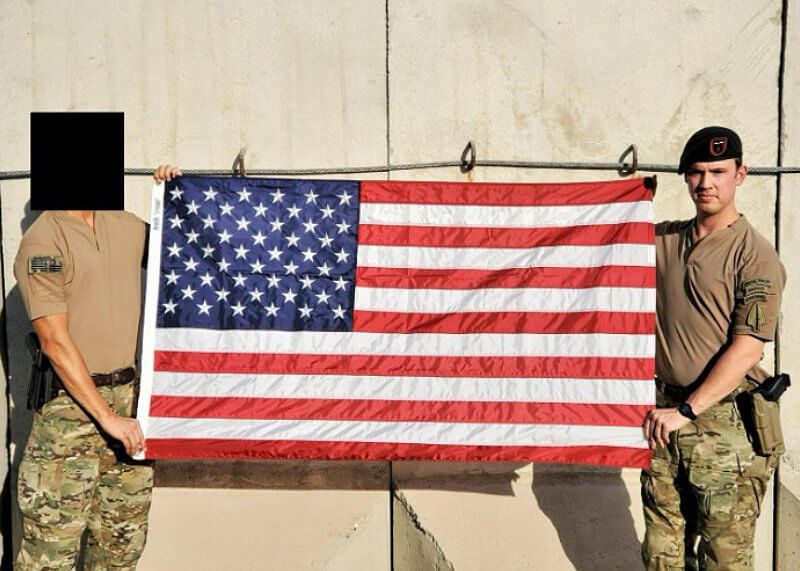
A teammate and I flew this flag in Iraq on August 31st, 2021, as America ended its mission in Afghanistan. (Nate Webster)
Becoming a Green Beret
Training to become a Green Beret at Fort Bragg was an amazing opportunity, not simply because of the adrenaline rush of a night skydive, or the constant positive pressure to improve from the incredible people from all walks of life unified in purpose, but because the work, at the deepest level, was about empowerment. We were, at the most aspirational level, strengthening communities to remain free, embodied in our motto, De Oppresso Liber, to liberate the oppressed. We trained individuals in medicine and planning and the skills that allowed a place to stand on its own.
From West Africa to East Africa, to Iraq, we worked diligently, and it is work I’m proud of, and the work is continued by tens of thousands of soldiers around the world today. Seeing a Kenyan soldier asked to guard his country’s porous border finally understand how to use a tourniquet, and therefore how to potentially save his or a friend’s life while on patrol, was deeply satisfying work. This work of teaching and training others channels our country’s ideal of self-determination in a personal way – learn how to take care of yourself well so you can learn how to take care of each other well. When we went abroad, we weren’t simply projections of America’s military might, but our highest aspirations. The success of our mission was measured, in the end, not by how well we performed tasks ourselves, but by how well our partners persisted after we left.
I loved the adventure, the learning, but somewhere in those years of operating around the world, I came up against something uncomfortable about myself: I had lost my connection to home. I did not feel particularly rooted anywhere. I had spent a great deal of discipline understanding places far from my own, on people who weren’t my neighbors, friends, or family, and in that decade, the place I had sworn to represent had changed. I knew how to salute the flag, how to wear it proudly, but I slowly realized I had an elementary understanding of the country behind it.
Coming Home
I left the military in 2022, and the residue of the work came with me. Nobody who has done that work walks out cleanly, and I was no exception. Adjustment was bumpy, but I had support, mostly with other vets similarly navigating the internal path as well, and thankfully I had a new history to learn.
The Green Beret mission — strengthening communities to remain free, teaching people the competencies of freedom — had an equivalent at home. As soldiers, we often operated in places where the rule of law was thin. Here at home, we have a robust system that I aimed to learn in order to continue the impact I wanted to have.
Our law is the working machinery by which a free people governs itself, argues with itself, rights its wrongs, and structures its communities. Law, like the military, is also a family affair for me. My paternal grandfather served during WWII and used the GI Bill to earn a law degree, after which he practiced for 50 years. His sons, my father and uncle, still practice in the same family firm. I realized those two paths could become one, in my own way.
In May of 2026, I graduated from Harvard Law School. While it was strange to sit in a classroom in my mid-thirties, after having spent so many years sitting in the back of a Chinook or on a range, it was rewarding to hear my classmates talk about what made them concerned and excited about America as it enters a new era. Being back in the classroom was a humble reminder that I was not too old to learn, and certainly not too old enough to learn from those younger than me.
My classmates were brilliant, almost without exception. They had been preparing for law school since they were children, the way I had been planning to be a soldier. While our experiences, slang, and upbringings were different, we connected over our attempt to grapple with the law, what role it plays in our society, and how it reflects who we are. What I discovered, sitting in lecture halls and reading cases, was that the country I had spent more than a decade serving was stranger and more magnificent than I had understood. The Constitution was a working argument. And it has been working — fitfully, imperfectly, sometimes poorly — for more than two centuries, and the working of it was the whole point. The founders handed us the obligation to keep finishing the thing they had started, knowing we never would. Knowing we would pass it down, just like military leaders do every time they change command and hand off the guidon, hoping the next generation will read and try to understand its history.
A Good Day, Still
Graduating in 2026, the year that marks twenty-five years since the towers fell, closed a chapter of my own history that began with 9/11. Law school gave me the intellectual groundwork to build on and find ways to bind us in a way we have not felt since that spirit of unification in the months after the attack. I haven’t figured out how that will take shape, but I do know that the lessons I’ve learned, starting in that middle school classroom — knowing our history, understanding the people around me, and the skills refined as a Green Beret — will apply.
We have two anniversaries to remember this year. I have been thinking about what it means to stand between them. The two hundred and fiftieth reminds us of how far we have come and how much we have had to overcome to be where we are today. The twenty-fifth ought to do the same.
Both are invitations to study history as a living thing — something we are still in the middle of. Our communities, our neighborhoods, and our country are held together by enough of us being willing to learn the story of a person whose politics, faith, geography, or history is different, and to respect it as true and complicated and theirs. We have never agreed about everything. The country was built to have “a more perfect union” as a guiding, aspirational verb.
I have spent the years since seventh grade trying to learn and apply history. In a humvee, on a patrol base, in a seminar, or around a table. Some days I think I have actually managed it. On other days, I keep trying. But every day, like that fateful one twenty-five years ago, remains a good day to study history.
